IMG_1391 

Painting by Juliane Porter


Part I

Pranayama, in Yoga, is the practice of controlling the breath, which is the source of our pranah, or vital life force.  If we control the breath, we control the mind.  Stated differently, fast breathing = restless mind; still breath = still mind and clear perception.  When the breath is still, the mind is still.

 Pranayama should only be practiced: after at least a year of asana practice, if one follows a Sattvic Diet, and if one practices the Kriyas (cleansing techniques).  It must always be taught under the guidance of an experienced teacher and should never be learned from books.  It is said that Pranayama, practiced correctly, has the power to cure all disease.  Conversely, pranayama practiced incorrectly, can be the cause of all disease.  One must practice slowly and steadily as Pranah must only be raised slowly and steadily.  Let's look into the incredible benefits of Pranayama Practice and the fascinating science behind it for further clarification.


THE PRANENDRIYA

There is a tiny organ in the middle of the chest which controls pranah.  Prana is the universal energy, magnetism, electricity while Pranah (with an "h" on the end) refers to Life Force in a living being.  Pranah consists of 10 Vayus, or vital force within various parts of the body. Although Pranah is one homogeneous energy, it can be divided into these 10 Vayus.  The Vayus control all the moving faculties within the body.  For example, The Apanu Vayu runs from the naval to the perineum, controlling excretion. The Prana (different than Prana/Pranah) Vayu runs from the naval to the throat, controlling respiratory breathing.  

The whole science of Pranayama is based on the Pranendriya pulsating in synchronization with the breath.  When we breath fast or irregularly we experience a lack of clarity, impaired sensory perception and a restless mind. On the other hand, when we breath slowly with regulation, the Prenendriya is in a state of pause and we're able to perceive accurately, think clearly and experience peace of mind.  Pranayama techniques are first used to calm the mind so we can meditate, especially via the technique of Kumbacha (breath retention) practiced by yogis since Vedic times, which slows the breath and retains it for a period of time, leading to transcendence of duality.


KUMBACHA & THE BOHR AFFECT

As we're aware, breathing delivers oxygen from the air, through the respiratory system, to be converted into energy within the body’s cells. Oxygen is transported in blood by hemoglobin (in the red blood cells), however, oxygen needs to be released from the hemoglobin in order to be absorbed in the body. Here is the fascinating piece. When there is a higher concentration of carbon dioxide in the blood,  hemoglobin releases oxygen, allowing more oxygen to reach our organs, muscles and tissues and be converted into energy. So, carbon dioxide, commonly only thought of as a toxic gas, turns out to be a key feature in enabling oxygen to get to where it is needed in the body.

The Bohr Affect refers to scientific studies by Danish Scientist, Christian Bohr, who discovered this fact, that Carbon Dioxide is essential in helping oxygen to release its bond with hemoglobin, and thereby, as a person’s oxygen levels increase in the blood stream, carbon dioxide levels then drop. So, without a healthy level of CO2, oxygen cannot be released, which is the root cause of many disorders.  Stated simply, high levels of CO2 indicates greater absorption of Oxygen into the blood which means Hemoglobin's Oxygen binding capacity is inversely related to CO2 concentration. Without proper levels of CO2, Oxygen can't be released from the red blood cells into the tissues. CO2 increases the capacity for Oxygen absorption. Even if there is a lot of Oxygen in the blood, it can't be absorbed unless there is enough CO2.

Kumbacha (breath retention) allows blood chemistry to normalize via the balancing of Oxygen and Carbon Dioxide (CO2) via two controls, the Heart Sensor located near the heart and the Brain Sensor, in the brain. When blood is low on oxygen (O2) the Heart Sensor notices and it speeds up respiration. When the body is low on Carbon Dioxide (CO2) the body responds via the Brain Sensor, which tells the body to slow down respiration.

The lowering of CO2 affects blood acid balance which causes blood vessels in the brain (the capillaries) to constrict reducing the amount of oxygen in the brain, in which case, the Brain Sensor signals the body to slow down breathing. In other words, to get oxygen to the brain, we need to breath slowly, and we need enough CO2.  Stated yet another way: slowing down our breathing increases CO2 in the blood, which in turn increases the necessary oxygen to the brain, and in turn stimulates brain capillaries to dilate so blood can flow through them.  Brain function is improved, thereby improving the function of the entire body. It is totally wrong to say CO2 is a waste product. 

THE HALDANE AFFECT

John Scott Haldane found the deoxygenation of blood increases it's capacity for CO2, which means the more the tissues can absorb Oxygen, the more CO2 increases.  Hyperventilation, or fast breathing or hyperventilation (such as much of us do) leads to lower levels of CO2 and therefore, reduced Oxygenation which further lowers CO2. A healthy human has 7% CO2 levels, whereas the atmosphere has .036-.039%. High levels of CO2 (the result of Pranayama: slow, regulated breathing and breath retention) means efficient oxidative metabolism (the exchange of O2 & CO2) which allows for O2 to release when and where needed. 

This sheds new light on CO2 for many of us who thought it was simply a waste product we gave to the trees!  In actuality, as Professor and Physiologist Yandell Henderson points out, CO2 is the primary hormone in the body because it is the only one produced by every tissue and acts on every organ.  Ironically, CO2 is, in fact "The Breath of Life".

In summary, Pranayama, the constriction of airways via controlled breathing techniques, leads to higher levels of CO2 which improves O2 delivery throughout the tissues of the body and dilates brain capillaries – creating an incredible health cascade. Additionally, inflammation is decreased by stabilizing Mast Cells and Nerve Cells, and mitochondrial activity is increased… Intrigued? We've only touched the tip of the ice berg. Stay tuned, as I know, this scientific info is often best in small doses so I will leave the rest of the juicy benefits, science… and a technique any of us can practice even if we haven't yet practiced Asana for one year… for Part II.  

Do you practice Pranayama? What is your experience of the benefits? Please feel free to share any questions and comments you have. 


IMG_1601
 Live Beautifully
 
Stay Well,
Juliane 
 

 Call or email today to set up Holistic Life & Wellness Coaching,

or a Private or Corporate Yoga Program

443.745.3418 


 Be sure to follow me on FacebookPinterestInstagramTwitter YouTube to stay current on all things SN!  


Thank you for visiting!

 Comment, Like, Subscribe & Share 


7 ALTERNATIVE MEDICINE TREATMENTS FOR ANIMALS: A SHORT GUIDE FOR CARING FOR YOUR PET NATURALLY


Kenzo had been paralyzed in all four legs for two weeks.  He wasn’t eating, he slept only on his side and he never even tried to get up. Prescription medications had no effect.  His owners were on a mission to find a solution, and that’s when they found Dr. Valérie Trudel’s acupuncture and osteopathy clinic. When Kenzo arrived at the clinic, he seemed to be in pain.

Dr. Trudel’s first instinct was to prepare his owners for the possibility of euthanasia. Obviously, that’s not a reality any pet owner wants to face, so they made up their mind to try everything they could. They knew the journey ahead would be long.  Dr. Trudel performed acupuncture on Kenzo and his owners decided to wait a full 24-hours before making a snap judgement about the results.  

Kenzo arrived lying on his side. After the first treatment, he left lying on his stomach. Dr. Trudel saw him again two weeks later; he was walking.  Alternative medicine specialists can recount many stories like this one.  “I want people to know that euthanasia is not the only solution,” explains Dr. Trudel. “When medicine or surgery are not an option, or there is advice against them, it is really worth the effort to try an alternative medicine. There are of course, many animals that are not euthanized because we have otherwise treated them.”

Are you looking for a solution for helping your pet?  Would you like to try the most natural treatments possible but are confused by all the options? This short guide is for you.  

Like you, many pet owners have found that traditional medicine is either not enough or too harsh on their pets. Like you, these owners consider their pet like a member of the family, and they will do everything in their power to give them the best care and, in the worst-case scenario, avoid euthanasia.

Animals quickly become part of the family. They fill an essential emotional need; we establish a real relationship with them. They remind us of our connection to nature and bring us back to what is essential.

What can touch your heart more than genuine concern from our dog when you’re feeling sad? What is more heart-warming than a cat nuzzling up to you after you’ve had a long day?  Animals force us to stop and enjoy the moment.  Recent surveys* show that the United States has over 310 million pets of all sorts, most of these being dogs, cats and fish. More than 44% of households own a dog and more than 35% own a cat.  Traditional veterinary medicine has made spectacular advances in the past few years and remains essential to the well-being of our companions. However, this is also the case for the different alternative medicines.

THE ADVANTAGES AND LIMITS OF ALTERNATIVE MEDICINE

Dr. Hélène Haltrecht, a holistic veterinarian and professor in the Faculty of Veterinary Medicine at the University of Montréal, practices at the Centre DMV in Montréal. She defines herself as a veterinarian specialized in COMPLEMENTARY medicines. All so-called alternative medicines can indeed be truly compatible and helpful, even if your pet is also treated with traditional medicine.

The main advantage of alternative medicines is that they can treat a number of ailments in a natural way without chemicals that could have adverse side effects.  Before you start any kind of treatment, be aware that the web is full of all kinds of information. It is important to consult with professionals who can direct you towards the right treatments.

Also keep in mind that, in more serious situations, your pet may need additional tests (blood tests, CT scans, ultrasound, etc.) or surgical procedures, which remain the specialty of veterinary medicine.  Alternative medicines are very effective for treating certain chronic illnesses, but in the case of an emergency, you should always consult a professional veterinarian. Furthermore, certain illnesses (like a serious heart condition) require medication.

In all cases, alternative and western medicines be completely beneficial when used together! A natural treatment can often be administered in addition to a medication (always under the advice and supervision of a professional). Natural approaches can also often improve the efficacy of a drug therapy.

ALTERNATIVE MEDICINE: A HOLISTIC APPROACH TO NATURAL WELLNESS

Alternative (or complementary) medicine is characterized by two things, whatever the specialty:

  • Its holistic approach
  • Its natural approach

This holistic approach is what we call holistic therapy, i.e. taking into account the whole (or totality) of the individual in order to treat them. The idea behind this approach is to understand the weaknesses in order to prevent issues instead of curing them.

Non-conventional, alternative, natural and holistic medicines (the terms are not lacking) are not only concerned with the physical aspects of your pet, but also its emotions and experiences, which can have a major impact on its physical health.  

Cécile Jean, doctor of veterinary medicine, practices osteopathy, acupuncture and phytotherapy in France.  “Practicing holistic medicine consists of understanding the patient as a whole. Care through alternative medicines such as osteopathy, phytotherapy and acupuncture enable this approach, which is ultimately very complementary to the allopathic medicine traditionally practiced,” she explains. “Like most holistic medicines, the objective so little used in the western world, is not to care for an illness, but to avoid the individual falling ill… it would be even more logical that a doctor or a veterinarian be paid to keep their patient in good health.”

This is confirmed by Hélène Haltrecht, already mentioned above.  “I aim for a comprehensive approach. According to the case, I look at what medicinal treatment or what combination would be the most appropriate for treating the animal. For example, acupuncture combines well with herbal remedies, especially for chronic problems (like neurological problems, herniated discs, paralysis, etc.) which are often difficult to treat with traditional medicines. Some animals do not respond well, or well enough, to medications. At this point, surgery is often required, but this is sometimes too costly for the client or perhaps they want to try to avoid surgery altogether.”

Alternative medicine offers other options, or at least complementary options, to traditional care.  “I always offer all of the options that I think could be beneficial to the animal. This can also include medications. If I think that surgery might be a good option, I will recommend it as well.”

Dr. Anne-Marie Potrawiak, a holistic veterinarian, practices at the Animomedic Clinic in Montréal. She considers her practice in osteopathy, acupuncture, homeopathy and phytotherapy to be an integrative medicine, meaning a holistic approach that treats the animal using different types of alternative medicines.

Many veterinarians now offer a combination of traditional medicine and alternative natural treatments, with fewer side effects.  Perhaps you are asking yourself, what can you treat with natural medicines? Most doctors and therapists agreed that the most frequent problems they encounter in animals are problems of chronic pain: herniated discs, osteoarthritis, older animals who don’t move as well, skin conditions, colitis, allergies, etc.

Would you like to treat your animal in the most natural way possible? We will now take a quick look at the different natural approaches available to you in order to help you make your therapeutic choices.

1. PHYTOTHERAPY FOR ANIMALS

“I have dealt with phobia / aggression problems in dogs through the combination of acupuncture and phytotherapy and exchanges with the pet’s owner,” says Dr. Jean.  

Plants to treat your pet? Is this even possible? Yes!  The use of plants to care for humans AND animals is not new. For millennia, humans have cared for their animals with plants.  Phytotherapy is the use of medicinal plants in various forms for the therapeutic benefits of their chemical components.

Animals living in the wild have a tendency to eat the plants that they find in fields, forests or groves in order to heal (in an instinctive way) some of their particular ailments. It is by observing wild animals that the medicinal properties of certain plants have been discovered.  Phytotherapy can be useful for strengthening the immune system, detoxifying the body, treating stress and anxiety, supplementing a proper diet in order to strengthen the body, or regulating the specific activities of certain systems or organs.  It should also be noted that, when used in combination, several plants can have synergistic effects that can influence an animal’s health in the long-term. In short, phytotherapy can be used preventatively in order to promote the overall health of an animal.

In this field, Chinese medicine uses herbs in combination with other treatments. This enables a reduction in the use of chemical medications (even replacing them) and therefore greatly reduces the harmful side-effects.  “I will often recommend Chinese herbs in combination with my other treatments. With that, we can give less medication, or it can even replace the drugs. Therefore, we have fewer side-effects,” explains Dr. Haltrecht.

Remember that a plant can be safe for a human but not for an animal and vice versa, so be careful about giving your pet a phytotherapy treatment you have taken. The metabolisms of animals and humans are different. Always consult a professional before starting treatment. Furthermore, as is often the case with alternative medicines, the therapies are meant to span from mid-to-long term.  If you choose phytotherapy for your pet, make sure to always choose reliable, proven professionals and suppliers.

2. ACUPUNCTURE FOR ANIMALS
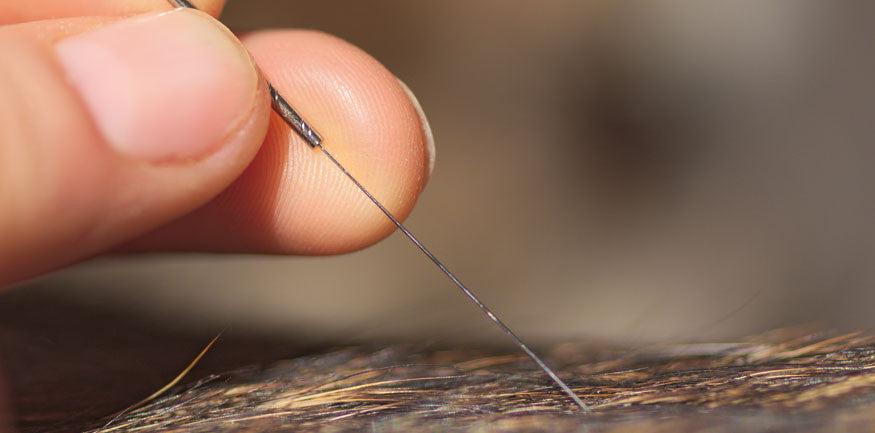
ACUPUNCTURE FOR ANIMALS - 7 ALTERNATIVE MEDICINE TREATMENTS FOR ANIMALS

Phytotherapy is often practiced in association with acupuncture. More familiar to the general public, this ancestral therapy is very well received by animals, contrary to what one might think.

“Acupuncture is one of five branches of Traditional Chinese Medicine (TCM),” explains Dr. Jean. “It is a medicine that has been established empirically over the course of centuries (more than 5000 years of existence!) and whose founding principle is the harmonious circulation of energy (or Qi) in the body. TCM is based on the idea that effective treatment can only be achieved by addressing the pathology and the patient in a comprehensive way. Disease is therefore, according to the Chinese, both the expression of a problem involving the organ to which it is linked and also the sign of a more general imbalance within the body. Or, even more widely, of the patient with his ecosystem (owner, other animals, habitat).”

“Acupuncture is a medicine in its own right, and can therefore be appropriate in almost all situations. However, there are situations where its therapeutic advantages stand out: dermatology, osteoarticular pathology, behavior, geriatrics, weak organs (kidney, liver, etc.). TCM, along with all holistic medicines, allows a comprehensive look at the patient, whatever it might be, and does not stop at the symptoms. It is therefore very useful in many pathologies”.

There are more than 300 acupuncture points recognized in animals and each provokes a specific reaction in the body. We use needling, heat, lasers, electric current and sometimes injections to treat the animal. Acupuncture allows the healing and regenerative mechanisms of the body to function to their full potential. It also stimulates certain nervous reflexes, which in turn stimulate certain organs. Like many alternative medicines, acupuncture offers a holistic approach, working with the animal according to its personality and experience.

Another benefit of acupuncture, as stated by Dr. Trudel, is often to treat the cases where the owners do not have the means to pay for surgery. Cases of ruptured cruciate ligaments or paralysis are great examples where acupuncture has shown great results. These surgeries, to name but a few, cost anywhere between USD 1,500 and USD 4,000. Even if the owners have the means to pay, the consequences of surgery may be as restrictive as the problem itself. Acupuncture allows a natural treatment and avoids many undesirable side-effects. It also proves very useful as relief for aging animals, allowing them to see out their final days without suffering due to lack of energy, joint pain, or stiffness.

3. PHYSIOTHERAPY FOR ANIMALS

Dr. Olivia Lannou is a physiotherapist at the clinic PhysioVetCare in France and recounts that “Coben had triggered a polyradiculoneuropathy, an autoimmune inflammatory disease of the peripheral nervous system, which led to a generalized flaccid paralysis. When he first came to PhysioVetCare, it had been almost three months since he could walk, he could barely hold his head up and was extremely amyotrophic. After one month of rehabilitation, neurological and muscular, and a lot of motivation, the results have met our expectations!”

“As a result of a cervical hernia, and despite the surgery, Canelle was paralyzed in all four limbs. Thanks to physiotherapy, her motivation and the perseverance of her owners, after two months of work, we have the joy of seeing her walking around again!”  She has many stories like these to tell! She and her team have seen animals arrive unable to walk into the clinic who are now fine.  Physiotherapy is now one of the alternative medicines which is developing more and more in veterinary clinics, in addition to other more traditional treatments. It is particularly noted for cases of neurological or orthopedic disorders.

Physiotherapy encompasses manual and instrumental techniques to diagnose and treat functional disorders and injuries. Physiotherapists use techniques such as massage and stretching as well as ultrasounds, electrotherapy, or hydrotherapy, etc. If your pet seems to have a neurological or orthopedic problem, physiotherapy could help.

The first objective is to ease the pain with various natural treatments and physical manipulations. The next goal is to help the animal regain its fitness. This is done a gentle way with manipulation by hand, or using natural elements like water, vibrations, heating/cooling or light.

Physiotherapy can also be combined with other natural treatments like homeopathy or phytotherapy to preserve the long-term health of the animal.  Physiotherapy will be noted in the case of arthritic animals or older animals who can no longer undergo an operation.

In the case of more serious orthopedic problems, surgery can sometimes be necessary. However, physiotherapy will often be used in addition to the surgery, or in post-operative treatment to allow the animal to recover as quickly as possible.

In fact, physiotherapy and functional rehabilitation are equivalent to the care given by kinesiologists in sports medicine. It is particularly interesting to use in post-surgical rehabilitation (orthopedic or neurologic), in rehabilitation of degenerative processes (osteoarthritis, degenerative myopathy, cauda equina syndrome, etc.), or in the preparation of sports dogs (specific pathologies of sports dogs, prevention of injuries, specific training program) as explained by Dr. Olivia Lannou, therapist at PhysioVetCare.

Physiotherapy is based on the use of passive kinesiotherapy (joint mobilization), active kinesiotherapy (exercises for stimulating balance, proprioception or targeted muscle building), electrotherapy, ultrasounds, hydrotherapy (walking in water which enables important muscular movement without putting weight on the joints) and therapeutic laser.

4. HOMEOPATHY FOR ANIMALS

HOMEOPATHY FOR ANIMALS online store - CARING FOR YOUR PET NATURALLY

Dr. Potrawiak is interested, like all specialists in homeopathy, in all aspects of the animal before administering any sort of treatment.

Homeopathy treats, in effect, the individual and not the disease in taking a holistic approach. In homeopath, providers are interested in the animal as a whole and not only in symptoms. It is what we call the law of individualization. Homeopathy is as concerned with the psychological as the physical aspects of the individual. This includes their experiences (trauma or otherwise) and hereditary traits as well. It paints a unique picture of your pet and proposes a treatment that takes all of these things into consideration. Homeopath differentiates itself from traditional medicine, which treats symptoms separately instead of considering the body as a whole.

How does the treatment work?

Homeopathy for animals (dogs, cats, horses, rabbits…) consists of treating animals by means of remedies (in small doses obtained by dilution). These remedies, in higher doses, are capable of producing similar symptoms in man (or in animal) to those of the disease, in order for the body to fight back.  The goal is to stimulate the body’s ability to heal itself (vitality). Homeopathic remedies aim to stimulate this vitality to help the body fight against disease.

The homeopath seeks to understand how symptoms manifest and also considers what aggravates them, what calms them, and at what times the symptoms appear. They take all of this into account in order to find a suitable homeopathic formula. Two animals suffering from the same problem could therefore be prescribed different homeopathic formulas.

This natural approach can be a good alternative to medications, particularly in cases of digestive disorders, psychological problems like anxiety, or hormonal imbalances to name but a few examples. Homeopathy helps limit many side-effects that you may see with drug treatments. It is also completely possible to use homeopathy in addition to conventional treatments.

Most animals react very well to homeopathic treatments. Many physical or psychological health problems can be treated with this approach, which has been used in Europe for a very long time and is becoming increasingly popular in North America.

5. AROMATHERAPY FOR ANIMALS

Dr. Nelly Grosjean, doctor in naturopathy and author of the book Veterinarian Aromatherapy, explains in an interview, “Aromatherapy is used particularly against ailments like coughs, digestive problems or alopecia, and is very effective antiseptically speaking (for fighting against bacteria, parasites, fungi, etc.). I strongly recommend it for the treatment of tendinitis, itching, joint pain, digestion, or even for strengthening the immune system or helping the animal recover after excessive physical exertion (for example racehorses).”

Aromatherapy is the process of using aromatic plant extracts (essences and essential oils) for therapeutic purposes, unlike phytotherapy which uses all the elements of a plant. 

However, be aware that some animals can be allergic or sensitive to certain essential oils. You should never use essential oils for the therapeutic care of your pet without the advice of a specialist in aromatherapy. Furthermore, they will sometimes advise you to try it on a small area of the body before using a treatment. The specialist will also let you know if certain oils should be avoided at particular moments in your pet’s life (pregnancy, lactation, etc.).

What is an essential oil?

Essential oils are a concentration of active ingredients derived from the distillation of an aromatic plant. Aromatherapy can not properly be called a ‘soft medicine’, because in fact, essential oils are a real package of energy! Oils used in aromatherapy must be of excellent quality and taken from healthy plants. Always check that the bottle indicates the exact name of the plant and its place of distillation.

Essential oils can be used for antiseptic, antimicrobial and anti-infectious purposes such as detoxifying, revitalizing or regulating the nervous system or hormonal glands. They increase resistance to illness, improve immune defenses and prevent infections and contagions. They can be used in prevention or in curative treatment in three different forms: diffusion into the air, through friction, or by internal absorption. Obviously, only healthcare professionals will be able to recommend which oils are suitable for your pet and how they should be used.

“My aromatic compositions have helped and continue to help the studs of the princes of England, the studs of a Jordanian princess, veterinary biotherapy clinics and equine osteopaths and dentists,” says Dr. Grosjean… Enough to convince the most skeptical amongst us, is it not?

6. OSTEOPATHY FOR ANIMALS

OSTEOPATHY FOR ANIMALS

Osteopathy is an alternative medicine which uses manual techniques and, like other natural medicines, is based on the principle that the body is an entity and that it is the patient (the animal) who is treated instead of the disease.

Osteopathy attaches a great importance to the vascular system and the self-healing power of the individual. It starts from the principle that all bodily systems interact with each other. In being able to treat all kinds of conditions, osteopathy often allows us to avoid taking medications. By focusing on the cause of the illness and not just the symptoms, osteopathy enables treatment of the problem at the source in order to avoid its recurrence. Knowing that certain health conditions require traditional medical interventions, osteopathy can be used in addition to other procedures.

“By regularly consulting an Osteopath, you allow your pet’s body to manage the disturbances which occur at a low level before the symptoms manifest (…),” explains Dr. Jean.  Osteopathy is also very complementary to acupuncture, as Dr. Trudel explains.  “It is rare that I treat only with acupuncture, given that the medicines are very close to each other in nature and are complementary. By combining the two approaches, I have treated, for example, a dog who had suffered with limping for several months and had been seen by several specialists. In two sessions, his problem was solved. It was a cervical vertebra that was stuck and which had pressed on the nerve. Another cat was limping on its back leg and was unable to put weight on it. Its owner was on the verge of euthanizing it. Three treatments later, the cat was walking.”

7. NATUROPATHY FOR ANIMALS

Naturopathy is also based on a holistic approach to illness and considers the body and the individual as a whole rather than only treating the health problem itself.

Animal naturopathy is concerned with the physiological needs of the animal as well as its well-being and comfort. A naturopath will often propose an overall health check of the animal while considering its diet, experiences and mental health before proposing any treatment. They will then propose the use of plants, flowers, aromatic essences, homeopathic remedies or trace elements to treat the animal. In all cases, the approach will be entirely natural.

The principal interest of naturopathy is its 100% natural approach. You will be certain, in consulting with a good animal naturopath, of providing your pet with non-invasive and completely natural care. The naturopath is a specialist in various natural medicines. They can propose different approaches for you to choose from (aromatherapy, homeopathy, etc.). The naturopath will consider all aspects of your pet’s life.

Like any alternative medicine, in specific urgent cases or in the case of certain disabling diseases, naturopathy cannot replace traditional treatments. However, it can work complementary to traditional treatments and may even improve their effectiveness.  As you can see, in terms of alternative medicine, there is no shortage of choices! From phytotherapy to osteopathy and covering naturopathy, physiotherapy, homeopathy, aromatherapy and acupuncture, you can find the natural approach that suits the personality and health needs of your pet.

All the experts we interviewed have told us the same thing: all these approaches are often linked to one another. This is why in your research you will find that many therapists are both osteopaths and acupuncturists, or naturopaths and homeopaths. In short, these complementary medicines each have their strengths and can act on different levels, and sometimes also in parallel with more traditional treatments.  Each case is unique and must be studied as such in order to find the best suited therapy. However, each case can be treated as naturally as is possible, if that is your wish for your most loyal companion.

“I treated a 10-year-old dog with osteoarthritis and an acute posterior limp, pain and associated tremors,” says Dr. Jean. “Well, classical medicine, and even osteopathy associated with phytotherapy did not seem to relieve it. On the other hand, after two close sessions of acupuncture, the limp disappeared (without any other associated treatment). It may not be obvious and, in some cases, we do not find in the first instance the care that is appropriate for the animal and its problem at that time, but when we do, the effectiveness can really be very impressive! There are also animals treated with oncology and, in some cases, we obtain remission with the combination of acupuncture or phytotherapy.”

We all want the best for our pets and, if possible, to avoid chemical drug treatments and the undesirable side-effects that come with them. This is a beautiful gift that we can give them! 

Dr. Trudel ends with this advice, “Consult your veterinarian before starting an alternative treatment.” Why? “A lady called me for her three-month-old Bernese mountain dog who had a limp in its hind leg. However, it turned out that the dog did not need acupuncture or osteopathy. It had, in fact, had a broken heel for one month.” In cases like this, only traditional veterinary medicine will be able to help your pet, then alternative care can be used to complete the treatment. So always be alert to the signs observed in your pet.

We’d love it if you could share your personal experiences in alternative medicine with us and our readers! Your story can help others make more informed decisions as they learn more about the benefits and limitations of natural approaches.  Also, feel free to send us any questions you may have. There is nothing like talking to other animal lovers!

We invite you to share your experiences, comments, questions and references in the section below. Thank you very much! Your contribution to the discussion will make a difference!


Screen Shot 2017-04-18 at 2.50.35 PM

Allow me to introduce you to HairPrint, the only 100% hypoallergenic, non-toxic, odor-free hair color in the world proven not only to restore hair to its natural color… it also improves hair structure!  

Bye-bye harmful chemicals that eventually cause irreparable damage to the hair shaft, follicles and scalp– Not to mention to our bodies as a whole, since the particles of standard toxic hair dyes are small enough to enter the bloodstream (the reason we can't color hair during pregnancy).  The melanin pigment in Hairprint is already present in millions of our skin cells and due to its relatively large size does not pass into the bloodstream.  

Currently, HairPrint has formulas available to return hair to its original shade of brunette or black… even if hair has since gone totally gray or white.   They're working on a formula for blondes to be available soon.  


Screen Shot 2017-04-18 at 2.50.35 PM


Fullsizeoutput_14da

When I stumbled across HairPrint I was intrigued by the fact HairPrint not only returns hair to each individual's specific natural color, permanently, it also leaves hair in better condition. 

Following are the details of my results.  I'll start with what led me to try it out in the first place.

Slowly but surely I've been overhauling all the products in my life from beauty to cleaning, food, laundry, etc. to upgrades (often inexpensive, simple alternatives) made with basically edible ingredients.  At this point I could conceivably eat most everything I use!  A lot of things do double duty – for example, it's amazing how much can be done with vinegar and baking soda.  It's been a process of becoming ever more conscious of how what I'm using in my environment and on my body affects not only myself, my family and my pets, but my neighbors, the community, all animals and people, the earth and beyond.  As we become more and more conscious, our eyes open wider to see conditioning for what it is… and we can't help but continue the journey down the rabbit hole, realizing and questioning the litany of assumptions, habits and beliefs we carry around, unravelling their domino affects which have become so tightly woven into society.  

Screen Shot 2017-04-18 at 2.50.35 PM


Fullsizeoutput_14e7

Which brings me back to hair… and the memory of a hair appointment a couple of years ago. For years I've been going to a lovely French salon in Washington for a great cut and  "rich brown" color to give my natural tone an overall boost.  This time, however, the experience went a bit differently. As a result of my ultra-clean lifestyle, my sensitivity to chemicals, smoke etc. has become super acute. Though I will say, I'd never been someone to care about stuff like this prior.  Now, something like a processed girl scout cookie – it literally tastes like plastic chemicals to me. Or the scent of fabric softener wafting through the neighborhood - startling and artificial to my nose. My senses have recalibrated to the scent of baking soda and essential oils in my laundry (bonus tip for super soft, lovely smelling clothes) and the bright fresh flavors of a plant based diet.

I digress, however, back to that hair appointment… WHEW!  My eyes, nose and scalp were on FIRE like I'd never experienced before!  I could barely contain myself under that black cape, realizing how incredibly toxic the whole situation enveloping my head was – I knew I could never do it again. What affect must it be having on my body I wondered… on my dear hair stylist… on all the stylists who do this for a living day in and day out, their clients?

 Yes, it is true, everyone's constitution is different.  Some people can withstand a lot more than others – or at least for a longer period of time before they notice ill affects.  Before they begin to put two and two together between the correlation of lifestyle habits and resulting diseases/impacts in body/mind/spirit.  Society/conditioning is a strong enabler, however, writing much off as a part of getting older or simply lumping various preventable maladies into the trusty folder of "it's a mystery, that's life". 


Screen Shot 2017-04-18 at 2.52.24 PM


Fullsizeoutput_14e9


Friends, it's not a mystery, there is a litany of research available demonstrating the devastating ill affects the thousands of chemicals present in the majority of "food", "cleaning products", "beauty products" etc. etc. being consumed.  Just check out the EWG site, read Dr. Michael Greger's book, How Not to Die, or watch the movies, What the Health, or Earthlings to get all the facts.

Why isn't all this stuff more well known?  Chalk it up to the machine of conditioning. Profit motives, lobbyists, habit… basically, ego on a large scale.  Ego is conditioning.  Who are we then if we aren't our ego, our identity?  Our authentic nature is love… the heart.  Our authentic nature does not lack or need to be "someone".  It's already complete. Full. Wise. Powerful. Beautiful. Our authentic nature does not want to envelop heads in harmful chemicals. It actually knows better – without even having to read a book, watch a movie or visit a website.  The heart doesn't support any of this stuff.  The heart, love, is very wise. It's who we really are. However, conditioning is a formidable and relentless opponent, and, if our eyes aren't open, it will take the upper hand.

However, No!  I'm not here to be a fear monger.  The good news is everyday there are more and more outstanding alternatives entering the market –  like HairPrint – with amazing, clean, beautiful high vibration products.


Screen Shot 2017-04-18 at 2.51.24 PM


Thankfully, many people are catching on so the awareness and demand for these beautiful choices is growing.  As I said before, it's definitely a rabit hole one enters, once we taste a real peach, we don't want fake peach flavoring. Once we start using real essential oils, chemical sprays and perfumes just don't compare. Yet, it's a win, win, win, win as there are SO many upsides to a clean lifestyle, from the health and beauty benefits of detoxification, to the mental and physical benefits of aromatherapy, the saving of animals (from product testing, exposure to the resulting toxins in our waterways, etc), saving our hair from turning to straw, preserving our beauty and youth… the list goes on!  A clean lifestyle on all fronts holds such integrity, improving, uplifting and preserving our body, mind, spirit, earth and everything/one around us. 

HairPrint not only provides a safe alternative to men and women who want to return their hair to it's natural color safely, but they're also giving 20% of their profits to educating women in developing countries.

I love the result in my own hair, though I have to say, since I've been plant-based I am suspecting that the few gray hairs I had, may be turning back to brown – more on this in another post – or feel free to ask about in the comments section.  I completed the process myself in my bathroom following the instructions to a T.  I had been using Surya Henna which I'd loved, previously.  However, it does contain some chemicals (though it's a FAR cry from standard hair dye) and it's temporary, washing out after 5 or 6 weeks.  Not so with HairPrint!  It's permanent.  Yes, the process is a tad lengthy – though shorter than driving to a hair salon if you account for travel time – and much less expensive.  I've read about others having their hair stylist do the process for them so that's always an option.  Additionally some women are even layering  successful balayage highlights overtop the HairPrint base. I'm a simple chocolate brown girl… as you can see from the results photos I've humbly interspersed alongside the stunning models depicted in HairPrint's inspirational artwork.

For more information on the HairPrint line of color, shampoos, conditioners and products, feel free to visit them here:  HairPrint.  No, I have not been paid to write this little testimonial. I'm just a happy customer :)  Also, I'm happy to answer any questions about my process switching from Henna to HairPrint as it does require a tad different procedure.  Overall, my hair felt super soft, silky and voluminous.  I didn't use ANY additional product aside from the HairPrint color – didn't even style it – just blew it dry and that was it.  In all honesty if I'd known I was going to take the results pics I'd have probably absolutely styled it – but this is at least a testament to the truth that HairPrint truly does improve hair structure making styling a potentially optional step 🙂


Much love,

Juliane 

 Be sure to follow me on Facebook, PinterestInstagramTwitter YouTube to stay current on all things SN!  


Thank you for visiting!

 Comment, Like, Subscribe & Share


IMG_8822

IMG_8825

IMG_8823


Why, Hello!  What great timing you have – I've just finished making you an incredibly Dreamy, Fresh Pressed Green Juice!  Mornings are a sunny celebration of high vibe goodness when accompanied by this jar of cleansing, detoxifying deliciousness.  Don't forget to switch up your greens regularly.

Wishing you a beautiful day filled with happiness, joy & laughter 🙂


Recipe for Dreamy Cold Pressed Green Juice

Ingredients:

  • bunch of flat leaf parsley
  • large handful of fresh mint
  • kale stems (I save the stems from my kale salads for juicing. Of course you may use the leaves as well if you wish)
  • 6 stalks celery
  • 2 apples
  • 2 lemons
  • 1 or 2" piece fresh ginger root
  • fresh, raw coconut water

Method:

  1. Cut everything into pieces then feed into your juicer.  
  2. Top with a bit of fresh, raw coconut water, gently stir to incorporate.
  3. Enjoy that amazing Green Drink buzz that lasts for hours and hours!


All Love,

Juliane


Have you ever done a juice cleanse?

 Be sure to follow me on FacebookPinterestInstagramTwitter YouTube to stay current on all things SN!  


Thank you for visiting 🙂 

Comment, Like, Subscribe & Share! 


Detox green clean


Hello, friends! A little while ago I promised I'd share my fabulous Essential Oil (EO) finds with you and I'm finally here to make good on my promise. I've amassed quite the EO collection by this point, using them as my gorgeous personal fragrance (all those chemical perfumes I used to wear pale in comparison to the scent of my beautiful essential oils) as well as edible grade essential oils in my recipes, smoothies, tea and drinking water. Today, however, I want to share with you several recipes for cleansing everything in our homes from the produce we eat to our floors, bathrooms and laundry too! I use a single blend that does it all. So simple. So clean. And, makes our homes smell absolutely heavenly. Let's begin with why it all matters:

When trying to live a healthy lifestyle by eating right and exercising, sometimes the last areas we may think to change are our cleaning and personal care products.  We pay a lot of attention to what we put in our mouths. We read food labels and see how much sugar, saturated fat, and chemicals are in food products.  So why not pay just as much attention to what we put on our skin?

Because the skin is our body’s largest organ, what we put on it and come in contact with gets absorbed into our bloodstream and integrated into our body tissues.  The skin is not a coat of armor on our body; of course it protects our body, but it is highly permeable.  Our skin is also our body’s thinnest organ. Only 1/10th of an inch separates our delicate organs from all sorts of toxins, many of which have estrogen-mimicking effects that can destroy all of our good health intentions.

We still want our homes to be clean and free of pests and harmful germs; however, the household chemicals we use to clean our homes pose some very serious health risks. Many ingredients in these popular products—products that we have grown to trust—are harmful to our health.  So, why would we want these toxic chemicals around us and our families?  The problem is that most of us  are not aware of these hidden dangers and how pervasive these health threats can be.  This is why it is so important for us to educate ourselves and find out what toxins we are regularly exposed to, ways to limit or reduce our exposure, and what products to use that are safe and effective alternatives.

Who knows what some of the toxins are that we are regularly exposed to through our cleaning and personal care products?

  • Triclosan is classified as a pesticide and probable carcinogen by the EPA. In fact, the EPA gives Triclosan high scores both as a human health risk and as an environmental risk. It is a synthetic antibacterial ingredient that contributes to the creation of resistant forms of bacteria like MRSA (Methicillin-resistant Staphylococcus Aureus). It is used as a preservative and not always labeled. It is a cheap way for companies to make their products last longer without collecting bacteria. 
  • Parabens: A study done by the Journal of Applied Toxicology detected high amounts of parabens in breast cancer cell growth. Parabens are able to bind to estrogen receptors, where they encourage breast cancer cell growth. It mimics natural estrogen that leads to cancer. It may contribute to sterility in males, hormone imbalance in females, and early puberty.
  • Phthalates make nail polish chip resistant and fragrances last longer. “Fragrance” is basically a secret mixture of chemicals. Companies are not required to list these chemicals on product labels. Toluene, which is in fragrances, is a known neurotoxin that causes loss of muscle control, brain damage, headaches, memory loss, and speech, hearing, and vision problems.
  • Sodium Lauryl Sulfate, or SLS One of THE most dangerous ingredients used in cleaners and personal care products. Laboratories use it to purposely irritate the skin on animals and humans so that they can then test the effectiveness of healing agents on irritated skin. It is a mouth irritant that is in almost every toothpaste and can cause canker sores. It prevents deodorant from drying out. It is the main ingredient in antifreeze.
  • The EPA considers Propylene Glycol so toxic that they require gloves and goggles when disposing of and burying it. 
  • Mouthwash products with an Alcohol content of over 25% are linked to cancer of the mouth, tongue, and throat.
  • Metals: Women with breast cancer have higher levels of these metals. Aluminum prevents our skin from sweating. 
  • It is amazing that all these toxins and chemicals, and many more that were not listed, are present in products that are designed to protect us.  

The European government has banned 1,222 times more chemicals than the U.S. Under the Federal Hazardous Substances Act, household cleaners are the only household products for which manufacturers are NOT required to list all ingredients. Certain ingredients, like fragrances for example, are considered trade secrets, and government regulations are designed to protect proprietary information. The power of large companies’ well-funded government lobbying efforts have allowed them to avoid legislation, often hiding behind the principle of “trade secrets.”

Most people assume the government oversees the multibillion-dollar household cleaning products industry, but the reality is that it is largely unregulated. According to the EPA, of the nearly three thousand top selling chemicals in the U.S., only 7 percent have a full set of basic toxicity information. For the most part, the EPA simply relies on voluntary testing agreements with major manufacturers.

Without full disclosure, consumers can unknowingly expose themselves and their families to unhealthy chemicals. The Natural Resources Defense Council recently tested 14 air fresheners and found that 12 contained phthalates, and none of the products listed this on the label. Until the government enacts laws to force companies to fully disclose their ingredients, or better yet test the safety of their ingredients, it is important for consumers to educate themselves.page3image20136page3image20296page3image20456page3image20616page3image20776

Many of us have grown tired of putting our health in jeopardy just to clean our bathroom, bedroom, or kitchen. It’s very obvious why green cleaners have such an appeal and why people want to use them. The household cleaning industry has caught on to this and responded in full force with product lines that claim they are green and natural. These products are labeled “green” and “natural” for marketing reasons and to charge 20-30% more. They usually contain the same amount of chemicals! This is a practice is called “green washing”—misleading marketing to make products appear green and healthy.

For example, arsenic, uranium, mercury, and formaldehyde are all naturally occurring and poisonous. “All natural” and “green” isn’t necessarily nontoxic. It is hard to tell what exactly is in our cleaning products under the Federal Hazardous Substance Act. We live in a chemical world; every day we are exposed to toxins, chemicals, and pollutants. It can be overwhelming to even think if we can avoid all of this exposure. Even some of the so-called “green” products are damaging to our health.

It may not be possible to avoid ALL of the toxins in our lives, but there are plenty of ways to significantly reduce our family’s exposure through simple lifestyle changes and behaviors.  We can decrease our family’s exposure to toxins by using essential oils for cleaning. It’s really not as hard as it might seem.

  • Use a damp rag when dusting. Chemicals often settle on surfaces, and dusting with a dry rag releases them into the air to be inhaled. Using a damp rag captures them on the rag instead.
  • Allow fresh air into your home frequently, this allows chemical-filled air to escape. The EPA estimates indoor air is 2-5 times more polluted than outdoor air, due in part to household cleaners and air fresheners.
  • Wash nonorganic produce in a vegetable and fruit wash or buy organic produce to reduce pesticide and herbicide exposure.
  • Making our own household cleaners is super easy using essential oils. It’s as easy as going to the cabinet and grabbing that toxic store-bought cleaner! PLUS it is a safe and very effective alternative! Who knows what essential oils are best for cleaning?
  • One of the great things about oils is their antimicrobial effect, and they are safe. Chemical antiseptics can cause just as much damage to our cells as the actual germ.

Here are some ideas for a powerful natural clean using just one essential oil blend, Thieves Oil:

  1. Thieves oil is one of the best essential oils for cleaning because of its antimicrobial effect.
  2. Thieves household cleaner is an all-purpose cleaner formulated with 100% plant- and mineral-based ingredients. It gets out tough stains and problem areas in the home without harsh or abrasive cleaners. It is biodegradable and complies with EPA standards.
  3. What are the five oils used in Thieves? (Clove, Cinnamon Bark, Rosemary, Lemon, Eucalyptus (E. radiate))
  4. Thieves oil blend was found to have a 99.6% kill rate against airborne germs! 

What's the story behind Thieves? The oils or herbs were used by thieves who robbed the dead and dying during the plague of the 15th century and who never contracted the disease. Our cleaner is patterned after this formula that offered protection during a time when 50 percent of Europe perished from the plague.


Simple Detoxifying Home Cleaning Recipes:
 

All-purpose Cleaner
1 capful Thieves Cleaner to 1 quart distilled water in spray bottle
 
 
Dishwasher
1 capful Thieves Cleaner
 
 
Pots and Pans
1 capful Thieves Cleaner to 3 cups distilled water
or
1.5 parts castile soap + 1 part water + 5-10 drops lavender or rosemary EO
 
 
Floors
1 capful Thieves Cleaner to 6 cups distilled water
or
Tile & Linoleum:  1/2 cup white vinegar in a bucket of water w/ a mop + EO of your choice  or juice of a fresh lemon
Wood Floors:  use the same mixture but only with a slightly damp mop. 
Marble or Stone:  avoid using vinegar, instead use water + castile soap + a little tea tree oil aka malaleuca for antibacterial option.

 
Walls
1 capful Thieves Cleaner to 2 cups distilled water
 
 
Fabrics
1 capful Thieves Cleaner to 2 cups distilled water 
 
 
Laundry
1 to 2 capfuls Thieves Cleaner, depending on size of washer
or
1 part vinegar + 1 part baking soda + 1 part washing soda + 1/4 part castille soap + your fav EO of choice
 
 
Carpet
1 capful Thieves Cleaner to 6+ cups distilled water
 
 
Light Degreasing
1 capful Thieves Cleaner to 3 cups distilled water
 
 
Medium Degreasing
1 capful Thieves Cleaner to 2 cups distilled water
 
 
Heavy Degreasing
1 capful Thieves Cleaner to 1 cup distilled water
 
 
Window and Glass Cleaner
1 capful Thieves Cleaner to 5 quarts distilled water
or
1 /4 tsp Thieves Cleaner to 1 quart of distilled water in spray bottle
 
 
Hand Cleaner
1 capful Thieves Cleaner to 1/2 cup distilled water
 
 
Fruit and Vegetable Spray
1 capful Thieves Cleaner to 3 cups distilled water 
 
 
My delay in sharing this post was due to experiementation with a variety of EO brands. I wanted to be certain of which I liked best prior to sharing with you.  I have fallen without a doubt in love with my favorite, Young Living Essential Oils.  I've found they're far and above the most beautiful, pure, therapeutic grade, premium-sourced, -cultivated and -distilled oils available.  Do some experimenting for yourself and I'm certain you'll come to the same conclusion.  If you have any questions about formulations for different cleaning projects than those listed above, sound off in the comments!  Thieves is definitely a no-brainer for most things, however I had only so much room to share here leaving out recipes for things such as dusting, pest repellent etc.  Tho don't worry, they'll be coming soon in a future post 🙂
 

Feel free to use my YL member code:  2061352 to take advantage of significant savings on the purchase of any Young Living Essential Oils enabling you to receive wholesale over retail pricing.


Love All, 

Juliane


What's your favorite way to use Essential Oils?  Do you have a favorite?  I absolutely love ylang-ylang & jasmine. 

 Be sure to follow me on FacebookPinterestInstagramTwitter YouTube to stay current on all things SN!  


Thank you for visiting 🙂 

Comment, Like, Subscribe & Share! 


Step #1 Sweat – This is a very effective way to eliminate toxins and poisons through the skin. Walk, run, do Pilates or hot yoga - and get into your sauna… work up a sweat on both Saturday and Sunday to purge those toxins.


Step #2 Exfoliation and Dry Skin Brushing – This removes the dead skin cells allowing the pores to breathe and detoxify more effectively. Do this step on prior to sauna or bathing to help stimulate the lymph system to clean itself and purge the toxins and poisons. This Loofah Package is a great way to help jumpstart the process.


Step #3 Detox Bath – Detoxing through bathing is considered an ancient remedy and it can be done in the comfort of your home on Sunday. A detox bath helps the body eliminate toxins as well as absorbing the minerals and nutrients in the water. Common ingredients used in a detox bath are Epsom salt, baking soda, and essential oils.


Step #4 Organic Skin Care and Organic Cosmetics – Decreasing the number of synthetic substances entering the body is another way to help detoxify the skin. Let’s face it, our skin is constantly exposed to environmental pollutants and toxins. Why add more with the use of cosmetics containing harmful ingredients such as parabens, petrochemicals, and synthetic fragrances? Instead, use certified organic skin care and cosmetics as an ongoing detoxifying treatment for your skin.


Lastly, try adding meditation to your weekend, starting with just 15-20 minutes (or up to 1/2 hour) each morning.  Meditation is scientifically proven to increase emotional balance, immunity and relaxation serving as a powerful anti-inflamatory by switching off the stress response.  This is great news for our skin!  Meditation need not be difficult, simply sit with a straight spine in a comfortable position, quietly.  Tune into your breath and follow the sensation of inhaling through your nose to abdomen then exhaling. Watch your thoughts like clouds passing in the sky, letting them go rather than wandering off with them.  When you do notice your mind wandering simply return to your breath.  Most importantly, remember, no matter how much chatter there is in the mind, there is no such thing as a bad meditation. Meditation happens to us. We don't do meditation. 


Love All, 

Juliane


What's your favorite way to detox?  Do you follow a detoxification lifestyle such as my whole food, raw vegan foodstyle?

 Be sure to follow me on FacebookPinterestInstagramTwitter YouTube to stay current on all things SN!  


Thank you for visiting 🙂 

Comment, Like, Subscribe & Share!


IMG_8488


IMG_8492


IMG_8530


These festive and rustic Pear Tartelettes with Dark Chocolate & Caramel are so delectable it feels rather a feat to convey in mere words their divinity… nothing can possibly match the exquisite experience of biting into such a dream!  Alas, proceed I must and, fortunately, their sheer memory has already made things easier…


IMG_8607


Encapsulating holiday decadence, these tantalizing tartelettes glisten in caramel and drizzles of dark chocolate atop beautiful layers of dried pear tucked inside a cookie-crisp crust finished with clouds of rich, vanilla bean ice-cream.  Pear Tartelettes with Dark Chocolate, Caramel & Vanilla Bean Ice-Cream (100% raw & vegan) are not only beautiful to behold I dare say they sing holiday carols to our taste buds with their incredibly vibrant and luxurious flavor.  Joy to the World!


IMG_8578


The apple (or pear in this case) doesn't fall far from the tree, as the inspiration for these beautiful Pear Tartelettes came from a traditionally cooked pie of the very same name which my husband used to request every holiday, birthday and other opportunity possible.  Since he loved it so much it was a necessity to recreate a raw vegan version.  Expectations were surpassed by far! This high vibe raw vegan delight is unbelievably BETTER!  Of course, I act surprised, perhaps because once upon a time it truly seemed that cooked recipe could not be improved upon if one tried, and yet I'm not.  Why wouldn't fresh, living ingredients with 100% of their life force essence completely blow us away!  


IMG_8497


Pear tartelettes are absolutely phenomenal even without the accompanying Vanilla Bean Ice-cream.   However, I'm never disappointed when that small voice of persuasion steers me to take things a step further – and this was no exception.  Vanilla Bean Ice-cream is a dream all in itself too!  Clouds of pure heaven.  And when two dreams unite, as in the case of magical tartelettes topped with pure clouds of heaven, well that's what we call a miracle, fit for celebrations!  Both the Tartelettes and the Vanilla Bean Ice-Cream are simple to prepare, though undivided care and attention to each element and sourcing of the very best of ingredients is needed. However, if you're anything like me, cozy, soulful kitchen time when heavenly tastes are a necessary means to perfection, letting go into the process is the reward and the beautiful result is simply one delicious circle of love.


IMG_8547


IMG_8491

 This is my submission to the Tinned Tomatoes & Lisa's Kitchen No Croutons Required + Bookmarked Recipes Challenges and Ren Behan's Simple & in Season!


Recipe for Pear Tartelettes with Dark Chocolate, Caramel & Vanilla Bean Ice-Cream (Raw & Vegan)

(Makes 2 tartelettes)

INGREDIENTS

Raw Vegan Pear Tartelette, Crust & Crumb Topping

  • 3 Pears, peeled and thinly sliced (1/8")
  • 1 1/4 cup oat groat flour (measure the flour not the groats, grind groats in Vitamix to get flour
  • 3/4 cup dates, pitted
  • 1 t vanilla powder
  • 1 1/2 – 2 T water
  • 3 T extra virgin coconut oil
  • 2-3 drops lemon essential oil (edible grade only)
  • 3/4 t himalayan salt 
  • 1/4 cup soaked/sprouted/dehydrated walnuts
  • 2 T raw coconut crystals

Raw Vegan Caramel Filling

  • 1 cup raw cashews soaked overnight
  • 1/4 cup raw coconut nectar
  • 1/4 cup full fat coconut milk + 1 or 2 T more as needed
  •  pinch himalayan salt
  • 1/2 t vanilla powder
  • 1-2 drops lemon essential oil (edible grade only)

Raw Vegan Dark Chocolate

  • 1/4 cup raw cacao powder
  • 1/4 cup extra virgin coconut oil, melted
  • 1/4 t ceylon cinnamon
  • pinch of himalayan or celtic sea salt
  • stevia to taste (I use barely any here)

Raw Vegan Vanilla Bean Ice-Cream

  • 16 oz frozen raw baby thai coconut meat
  • 2-3 frozen super ripe bananas
  • stevia to taste
  • 1/2 t vanilla powder

 METHOD

Dried Pears

  1. Assemble sliced pears on a teflex sheet of the dehydrator and dry at 115 for 2-3 hours. Alternatively, dry on lowest setting of your oven w/ oven door propped open an inch, for and hour.

Tartelette Crusts

  1. Process Oat Groat flour, Dates and Vanilla Powder in a food processor until well incorporated and broken down.  Add water, essential oil, coconut oil and salt and pulse until fully combined and dough sticks together when pinched between two fingers.
  2. Take 1/3 of the above mixture and set it aside for latter use in crumb topping.  
  3. Press the remaining 2/3 into two 4" diameter 3/4" deep pie tart tins.
  4. Place into the dehydrator at 135F for 1 1/2 hours. Turn down to 115 for another hour then remove and set in the freezer.  Alternatively, use your oven on lowest setting w/ door propped open an inch for only 1 hour.

Crumb Topping

  1. Toss the mixture set aside in step 2 above with 1/4 cup chopped walnuts and 2 Tbsp raw coconut crystals until crumb topping coated lumps are achieved. Set aside.

Caramel

  1. Blend all the ingredients in a Vitamix until smooth and creamy adding extra coconut milk as necessary to thin.  Place mixture in fridge where it will thicken slightly.

Dark Chocolate

  1. Whisk together all ingredients until completely smooth.

Vanilla Bean Ice-Cream

  1. Blend all ingredients in Vitamix, using the tamper, until super smooth and creamy. Scoop out into an air tight container and set aside.  If storing in freezer, allow to come to room temperature for an hour to thaw and make scoopable, before serving. I actually prefer storing mine in the fridge where it retains a whipped ice-cream texture. This ice-cream does not melt away like traditional making it very nice for entertaining!

Tartelette assembly

  1. Smear a thin layer of the caramel across the bottom of each tart shell.
  2. Neatly layer the dried pears inside the two tartelette crusts, smearing a bit of the caramel over each layer, including the top, as you go.
  3. Sprinkle crumb topping over top.
  4. Set tartes in freezer for 20 minutes to set.
  5. Remove from freezer and drizzle tartes with dark chocolate.
  6. Optional: Drizzle a very TINY amount (1/2 to 1 teaspoon) of coconut nectar across the top for an extra caramel topping affect. Don't go overboard or it will turn into a sticky ooey-gooey mess!
  7. Place back in freezer for final set.  Bring to room temperature for 1 hour before serving.
  8. Tartelettes can be served whole or sliced into 4 – 6 pieces and topped with Vanilla Bean Ice-Cream.  The Vanilla Bean Ice-Cream will not melt at room temperature making these perfect for entertaining!  
  9. Revel with pleasure on a cloud of Sweet Holiday Bliss! 


Do you have a holiday favorite you'd like upgraded to a high vibe raw & vegan version?  Share in the comments below for the opportunity to have me recreate it for you!


Follow me on FacebookPinterestInstagramTwitter & YouTube to stay current on all things SN! 


All Love,

Juliane


Thank you for visiting 🙂  

Comment, Like, Subscribe & Share!


IMG_8479
  

IMG_8440

 No-Wheat Thins with Aged Treenut Cheese & Cranberry Compote (Raw Vegan)

IMG_8393

No Wheat Thins and Artisinal Aged Treenut Cheese  

IMG_8344

No-Wheat Thins & a jar of Cranberry Relish make a perfect hostess gift! 


I know I've got a hit recipe on my hands when I simply can't stop eating it during the photo shoot!  Every other snap I found myself rewarded with yet another irressistable assembly of a Buttery No-Wheat Thin Cracker topped with Aged Treenut Cheese & sweet-tart Cranberry Compote… SOOO GOOD!  And perfect for holiday entertaining!  This little trio is a complete rockstar combo, however, these No-Wheat Thins are delicious enough to eat all by themselves, like chips.  They even smell amazing!  Seriously, their delicious aroma was why my photo shoot took 3 times longer than normal cause I couldn't resist their tantalizing scent of pure yumminess.  I had so much fun popping these little cracker, cheese and cranberry relish bites into my mouth, it's amazing I had any product left to photograph 🙂

Two more easy-peasy raw vegan recipes to impress and convert even the most die-hard of SAD (Standard American Diet) devotees  :)  Filled with the most amazing fresh, vibrant flavor, brimming with high-vibe life force and everything we need to feel and look as amazing as we are!  I'm quite proud of both these concoctions as I've tried SO many raw vegan cracker recipes I just didn't care for at all.  If you love buttery, salty crackers with an ever so slii-iiightly sweet background note, then these are for you!  The sesame and almonds provide a luxurious richness that takes the flavor right over the top – and of course these babies are gluten/wheat/grain/dairy & sugar free!  As for the Cranberry Compote… THE BEST.  A perfect slightly jellified, firm textured relish with the most gorgeous flavor you've ever had since these cranberries are radiantly alive! This perfectly sweet compote is sweet as can be with that cranberry tang we love.  Topped with a twist of orange zest over aged treenut cheese (recipe coming soon, meantime this Baby "Mozzarella" is absolutely devine) on my No-Wheat Thins… Pure Heaven!

Please enjoy!


IMG_8359


IMG_8385


IMG_8465
   This is my submission to Tinned Tomatoes for the Bookmarked Recipes Challenge and Ren Behan's Simple & in Season!


Recipe for Raw Vegan No-Wheat Thins

Ingredients

  • 1/2 cup raw sesame seeds soaked overnight & drained
  • 1/2 cup raw golden flax soaked overnight & drained
  • 1 cup raw almonds soaked overnight & drained
  • 1/4 cup coconut nectar
  • 1 1/2 teaspoons celtic sea salt
  • fresh cracked pepper to taste

Method

  1. Dump all ingredients into a food processor (the moisture from soaking/rinsing your seeds & nuts should be adequate especially since the flax holds on to quite a bit, however feel free to add a tablespoon or so extra if necessary) and pulse until well incorporated and a dough forms, scraping down the sides of the bowl as needed.
  2. Spread the dough, using a spatula, across two teflex sheets (I spread mine about 1/8" thick, covering about 1 1/2 sheets) of your dehydrator or onto a silpat if you don't yet own a dehydrator.  The thinner you spread the dough the faster your crackers will crisp.
  3. Score the dough into cracker sized pieces with a knife.  Dehydrate at 135 for the first hour, then turn down to 115 for another 3 hours.  
  4. After 3 hours, flip the dough onto a dehydrator screen and dehydrate another 1 or 2 hours until the crackers reach the level of crispness you prefer. Timing will vary depending on climate. Store wrapped in a bit of parchment in an air tight container in the fridge to keep crisp.  If using an oven, set the temperature to the lowest possible setting. Please be aware that the crackers will probably not be raw using an oven due to their typically higher heat.


Recipe for Raw Vegan Cranberry Compote (best to make 2 days ahead as it continues to jellify during entire 48 hours reaching a perfect ever-so-slightly jellified relish consistency)

Ingredients

  • 2 cups fresh cranberries
  • 3 Tbsp black chia seed
  • 3 Tbsp coconut water, orange juice, apple juice or filtered water
  • 1 1/2 Tbsp powdered stevia (or sub coconut nectar, raw honey, maple syrup or coconut crystals reducing liquid above if using a liquid sweetener here)
  • 1/8 tsp vanilla powder
  • 1/4 tsp ceylon cinnamon OR a couple of drops of edible grade sweet orange essential oil
  • orange zest for garnish

Method

  1. Stir together chia, coconut water (or juice depending on what using), vanilla powder and cinnamon (or sweet orange essential oil depending on what using).  Allow to sit for 15 minutes to form a gel, stirring every 5 minutes.
  2. Pulse the 2 cups cranberries and your sweetener in a food processor until only slightly broken down.
  3. Dump the chia gel into the food processor slightly processed cranberries and continue to pulse until the mixture is incorporated and retains the texture of relish as pictured above.  Be mindful not to overprocess.
  4. Pour the mixture into a decorative jar and allow to set, ideally, for 48 hours.  This isn't going to become cranberry jello or jelly- it's a relish style compote. However, the setting will enable the relish to stay firm in a small bundt pan shape for example and it will have a firm lightly jellified texture after 48 hours. Serve garnished with orange zest.


What raw food or vegan dishes have you made and loved lately?!  Do you have any questions I might be able to address for you? 


Follow me on Facebook, Pinterest, Instagram, Twitter & YouTube to stay current on all things SN! 


All Love, 

 Juliane 


Thank you for visiting 🙂  

Comment, Like, Subscribe & Share! 


Who’s ready for an insanely delicious comfort food recipe that tingles the tastebuds, warms the insides and satisfies our cravings for a rich bowl of creamy pasta without all the calories and carbs?

Enter this raw vegan (yes, it’s deliciously warm) version of one of StyleNectar’s most popular dishes ever, Tom Yum Soup.   I’ve been wanting to share this raw vegan twist on this hit recipe for such a long time and after testing it over and over to be sure it was perfect, it’s finally here!

Spicy Tom Yum Coconut Noodles prove once again that amazing, complex flavor, full-bodied hearty pasta decadence and our highest potential health, happiness and beauty are not mutually exclusive!  As I always say, it’s easy to prepare delicious food that tastes amazing- however, that’s not enough for me.  If it doesn’t make US look and feel as amazing as it tastes, it doesn’t make the StyleNectar cut.

This is my submission to Tinned Tomatoes & Lisa’s Kitchen No Croutons Required & Bookmarked Recipes Challenge, Fuss Free Flavours, Ren Behan‘s + Feedingboys‘ Simple & in Season.

In this luxurious upgrade to the original non-vegetarian recipe, I was able to increase the coconut milk as the recipe no longer relied on animal product, thus taking the creamy rich factor off the charts!  Next, I increased the shiitakes for double the fabulous meaty texture.  And the piece de resistance, to soak up all that spicy Tom Yum decandence, oodles of perfectly al dente kelp noodles!  Fresh garlic, ginger, chilis and lime and few tweaks to replace the chicken stock and fish sauce to season everything up perfectly, and a star was born!  Hey, don’t take my word for it, just ask Jim who is in heaven right now gnoshing this down 🙂

If you haven’t tried Kelp Noodles this is definitely your lucky day.  These mineral rich babies, miraculously, have almost zero calories and when prepared properly, taste & feel exactly like pasta.  They soak up the flavors of any dish they’re paired with for that luxurious high-carb affect and NONE of the downside!  Coconut milk and shiitakes are both immune boosting powerhouses and the addition of anti-inflammatory ginger, cleansing cilantro and circulation-enhancing chilis take this bowl of deliciousness into true superfood heaven.

Another high-vibe, living foods recipe packed with energy, antioxidants, minerals, vitamins, enzymes and everything we need to stay healthy.  Filled with life force, love and the simplicity I’m learning is the foundation to everything exquisite. 

Enjoy 🙂


Recipe for Spicy Tom Yum Coconut Noodles (Serves 2-3)

Ingredients

  • 2 cups “no-chicken” or vegetable stock
  • 1 stalk fresh lemongrass thinly sliced into rounds
  • 1 inch piece fresh ginger root thinly sliced
  • 1 large clove garlic, minced
  • 1 tsp thinly sliced medium-heat red chili pepper + extra for garnish (seed & devein for less heat)
  • 12 oz kelp noodles, rinsed and drained
  • 1 or 2 strips wakame seaweed chopped into 2 inch pieces
  • 2 cups thinly sliced shitake mushrooms
  • 2 cups raw coconut milk** (or feel free to sub 1 can FULL FAT coconut milk in a pinch)
  • 1 Tbsp raw miso paste
  • 1 Tbsp raw honey
  • 1 tsp coconut aminos or tamari
  • 1 1/2 – 2 Tbsp fresh lime juice or to taste + small lime wedges for garnish (remember, don’t add lime before bringing to a simmer or it goes sour!)
  • 4 Tbsp freshly chopped cilantro, 1/2 reserved for garnish

Method

  1. In a large pot combine the first 6 ingredients (veg stock through wakame)and bring to a light steam or baby bottle temperature to keep raw. Turn off heat, cover with a tight lid and let steep for 20 minutes to allow the flavors to meld. Alternatively, if you don’t care about it being raw, bring to a simmer, then simmer for 5 minutes.
  2. Add shitakes and coconut milk and bring back to a light steam/baby bottle temperature.
  3. Whisk in remaining ingredients, garnish with extra cilantro, a few slices of red chili & lime wedges and relish in comfort food bliss! 


** Raw Coconut Milk:  I blend 2 cups raw, thai baby coconut meat with 1/2-3/4 cup (adjust depending on thickness you want) raw thai baby coconut water (Whole Foods sells both raw coconut meat & raw coconut water frozen or crack open your own), 1 Tbsp raw coconut butter & an optional 1 tbsp Tocotrienols (aka my fav non GMO sunflower lecithen) to help emulsify & voila, instant raw coconut milk. Store extra in ice-cube trays in freezer for smoothies.

Enjoy 🙂

Are you a winter or a summer person?  Or, perhaps do you love each season for it’s contrasting individuality? 

Follow me on FacebookPinterest, InstagramTwitter YouTube to stay current on all things SN! 

All Love,

 Juliane

Thank you for visiting 🙂  

Comment, Like, Subscribe & Share!


IMG_7959

IMG_7926

  IMG_7932


Nobody loves a creamy, delicious smoothie better than I do.  So when Williams-Sonoma invited me to help kick off their upcoming "Smoothie Week" with a couple of my favorite "Not Your Everyday Smoothies", I was super excited!  

Last week I shared the delectable Chocolate Covered Matcha Smoothie.  This week, I thought I'd jazz things up with a wonderfully colorful concoction we can all wiz up in our with whatever favorite fruits & greens we happen to have on hand.

Fresh smoothies are simple to make and incredible for our body, mind and spirit. I make them daily because they're absolutely delicious, alive and radiant… and they make me feel the same way!  We all know how important it is to eat the rainbow daily and this delicious Eat the Rainbow Smoothie is a lip-smackingly yummy way to do just that.


IMG_7944

IMG_7957

IMG_7961


So grab your favorite juicy berries, sweet bananas and bright colorful mangos &  pineapples galore!  (Feel free to choose frozen fruits. They're frozen at the peak of ripeness and, ironically, are often more nutritionally rich than fresh produce which is picked prior to fully ripening, followed by weeks of transport, store display, and time in our homes before ever being eaten)  Add a handful of powerful, chlorophyll and mineral rich greens to tuck inside all that flavorful goodness… and you're ready to get blending.  Simply layer it up in whatever manner you'd like.  Optionally, top it with your favorite berries or superfood treats such as dried mulberries an goji's as I've done here… or keep it simple and leave it as is.  Voila, you've got a perfectly luscious fireside treat for bundling up with in your favorite chair, all yours to devour 🙂


IMG_7958


Recipe for Eat the Rainbow Smoothie (Serves 2)

Ingredients

  • 4-6 frozen super ripe bananas
  • 1 cup frozen or fresh berries (pick your fav!)
  • 1 cup frozen or fresh mango or pineapple (or whatever you have on hand)
  • 2 handfuls of greens such as spinach, romain, chard, parsley
  • 1/2 a fresh lemon (optional)
  • dates, raw honey, stevia or your fav sweetener to taste
  • optional: additional fresh berries &/or superfood toppings such as mulberries and goji berries

Method

  1. Blend the bananas and sweetener to taste in your Vitamix or other high speed blender til smooth and creamy.
  2. Dump 1/3 the mixture into the bottom of your 2 favorite smoothie containers. Dump the other 2/3 into a bowl & set aside.
  3. Add greens & optional lemon to the Vitamix along with 1/3 of the leftover blended bananas. Blend til creamy, taste to adjust sweetness as desired, and divide amongst your 2 smoothie containers. 
  4. Add berries to blender and 1/2 the remaining blended bananas. Blend and dump atop the first two layers in your containers.
  5. Add your mango or pineapple and last portion of blended banana to the Vitamix. Blend and add to your smoothies.
  6. Top with your favorite fresh berries &/or superfoods such as mulberries & goji. Or just leave it plain which is super yummy too!

Enjoy 🙂


You may also enjoy these fabulous smoothies:

 Cleansing Quadruple Berry Acai Smoothie
Daily Detox Green Smoothie
Chocolate Covered Strawberry Shake
Chocolate Chip Mint Shake
Epic Baby Thai Coconut Smoothie
Blueberry Coconut Shake
Delicious Green Smoothie
The Happy Shake


Do you have a favorite “Not Your Average Smoothie” ?


Follow me on Facebook, PinterestInstagramTwitter YouTube to stay current on all things SN!


All Love,

 Juliane


Thank you for visiting 🙂  

Comment, Like, Subscribe & Share!